

Listen to the Full Episode:
Retirement isn’t just about making your money last, it’s about using it wisely while you still can.
In this episode of the Plan Your Federal Retirement podcast, Micah Shilanski, Managing Partner, Wealth Advisor, is joined by his father, Floyd Shilanski, Managing Partner, Wealth Advisor, to unpack one of the most complicated challenges federal employees face: balancing today’s lifestyle with tomorrow’s longevity.
From distribution strategies and liquidity planning to housing decisions, aging in place, and preparing for unexpected large expenses, this conversation dives deep into what actually happens over a 30–40 year retirement. With decades of real-world client experience, Floyd shares stories that highlight why flexibility, intentional planning, and foresight are essential, not optional.
If you’re a pre-retiree or early retiree wondering how to enjoy retirement without becoming a burden or running out of money, this episode is for you.
What We Cover:
- Why retirement planning is a balancing act between today and 30–40 years from now
- The difference between the distribution strategy vs. income guessing
- Why your “final retirement home” is rarely final
- How aging in place changes financial needs later in life
- Why lump sums matter just as much as monthly income
- The emotional and financial impact of unexpected family expenses
- Why renting before buying can save tens of thousands of dollars
- The importance of liquidity vs. marketability
- Why retirees often underestimate their taxable income
- How flexibility protects you when life changes
Action Items
- Review your distribution plan for flexibility
- Identify your “lump sum’ needs ahead of time
- Make a plan for your retirement spending
Resources for this Episode:
Ideas Worth Sharing:
I don't think I've got one client that bought the last final home.” – Floyd Shilanski Share on X
You can't make sure there's too much money on the back end, because that means you didn't have enough to do the things you wanted to do while you could.” – Micah Shilanski Share on X
Do you want to go to a nursing home? And what do you think the answer is? Not no, but hell no.” – Floyd Shilanski Share on X
Enjoy the show? Use the Links Below to Subscribe:



Micah Shilanski (00:00.462)
Welcome back to the Plan Your Federal Retirement podcast. I’m your co-host, Micah Shilanski And today we’re going to be jumping into some really good questions that we get. Boy, it starts off with early in retirement, but also that longevity planning into retirement. And how do you balance these worlds? How do you balance decisions that are going to affect you 30, 40 years from now and making the right ones today? It’d be really complicated. So with that, I wanted to invite on my dad, Floyd Shilanski onto the podcast. Floyd has been an advisor for
darn near what 40 plus years. So you’ve seen this in many different ways. And so we’re going to kind of dive into that, pops. Thanks for joining us.
My pleasure, son. Happy to be here. You know, it’s interesting. Like we were talking earlier this morning where I had an almost empty calendar. I had three emergency phone calls this morning, all around longevity, all around money, and several conversations over the last week or so talking about Social Security and will it be there or not be there. But I think at this state, you know, it’s always interesting when we get back to the first part of a year or the closing part of a year.
everyone gets more excited about the dollar signs. So talking about these things today, think is very, very timely, son.
It is. And one of the things that is a pre-retiree and as an early retiree, you have to figure out is how do you make a distribution strategy, which is not only going to last your entire life, not only going to take care of your survivor, but make sure there’s money on the back end to take care of you. But you can’t make sure there’s too much money on the back end. Cause what does that mean? That means you didn’t have enough to do the things that you wanted to do while you could do them. Right? So it’s this weird aspect of a balancing act that we have to make.
Micah Shilanski (01:40.174)
And I just finished doing this long YouTube video so you guys can go and watch it about distribution strategy with the TSP and kind of the Goldilocks and where’s the middle ground that you need to be. So we won’t talk about on this podcast. Again, it’s a YouTube video. It’s going to be out there. You guys can jump into that, but pops, let’s kind of talk about this. Let’s first remember the retiree standpoint, you know, the aging and play standpoint, let’s back it up to kind of the pre-retirement mode. So one of the things that you kind of made is we were kind of pre-gaming sharing with any experience you have with your client is they’re going to move into a 55 plus community.
But one of the things, whenever that comes up, we always got to remind our clients that’s probably not your last move.
It’s not one and done. I can remember, Micah, 30 years ago when I retired, I went and my last final home. 30 years ago, I said, yeah, that makes sense. Ratchet forward 30 years ago, I don’t think I’ve got one client that bought the last final home. And the reality is, what I have found, there’s at least three more moves. In the state of Alaska, we get so many people are going outside the state of Alaska because they’re tired of the snow, they’re tired of the dark, they’re tired of the ice. Okay.
And when I talk to them, I say, look, do you want to golf? Do you want to ski? Do you want to beach? So I’m trying to find that place, that resort type of living, I guess. And that’s going to last you three, four, five, maybe six years. Then as you get older, you’re going to go, huh, the kids are a two day drive away or the kids are an airplane ride away. And I find so many of my clients getting closer. Now closer is different for everyone, but they start to get closer.
And I jokingly say the last two moves will be into the hometown of the family that you want to help take care of you, or then to the basement of the house where the kids are going to take care of you. And when I mentioned that, guess what every one of my clients say, Micah?
Micah Shilanski (03:29.198)
Probably some to the effect that, you know what, I took care of each one of these kids for 18 years, that darn right, they should be taking care of me.
Or, I don’t want to be a burden on my kids.
That’s what my dad tells me. Sorry. Okay. That’s fair. Yes. I don’t want to be a burden to my kids. Right. We hear this all of the time with clients and it’s really quite this loving thing pops that, people say, but we need to make sure we’re planning to make sure you’re taken care of. Right. Throughout all in this retirement quite frankly, is a phenomenon in the recent times, like go through all of human history. You worked until you died. Right. That was pretty much it. This whole retirement thing is kind of new.
And also kids always took care of their parents. Well, most of the time throughout civilization took care of it. So now this aspect of, you know, moving on to this independence in retirement, independence and aging in place and independence and death, that’s different. There’s not that much experience worldwide in that.
know, Asia has a different approach to that, as you well know. Their families take care of families regardless. And we see the same thing in the northern countries, in Norway and Sweden. I have friends in Sweden that say it’s it’s a norm. It’s almost a compound living, all right? That’s not in the United States. We’re free and independent and we want our independence. And one of the most difficult things for a aging couple or individual to do
Floyd Shilanski (04:45.666)
There’s one thing they are forced to give up, Micah, that they fight and fight and fight and fight to keep it. And it is…
driver’s license.
Right. You my dad, and you know this, after he hit bulls and cows, know, getting him to surrender it voluntarily. man, there was a lot of heated discussions on that, which you will have with me, I’m sure, when that time comes.
Well, know, pops for your safety, you should surrender your license to the Corvettes. Like I’m just saying, there’s things that we should do to not biased in that decision, by the way. And those are hard things though, right? To give up that independence, to give up that control. And it’s also in the living side of it as well. Like where are we going to live? So one of the things is we’re making these decisions, whatever we’re working with, people getting ready to retire and we’re kind of building out a distribution plan for them. We got to be thinking about at some point in time,
Not just a
Micah Shilanski (05:36.92)
they’re gonna need a large lump sum of money. Right now, hopefully it’s for something cool. Hopefully it’s for a new RV, this amazing trip, these other things we wanna do, but they’re gonna need a lump sum of money more than likely. Now, sometimes it’s not for the cool things. Sometimes it’s for assisted living because they’re forced into a move, because of medical issues that are gonna come up, but we need to have a plan in place for retirement that not only provides the income in your 50s and 60s when you’re young and you can do all the things you wanna do.
but is available for lump sums in the 80s when you have to use that money for quality of life.
quality of life? That’s a major question, all right? And I’m having a lot of these conversations with my 70, 75, 85 year old clients today. Do you want to go to a nursing home? And what do you think the answer is? No, not no, but hell no, all right? I want to be taking care of the house as long as possible. Then we get into this whole age and place issue, right? And like we were talking as we were pre-gaming this thing, every time one of my senior clients goes to build a house,
I always recommend that in the bedrooms, they plumb in the oxygen. So the big cylinders are out in the garage, not wheeled down the house. And of course, now they have the portable machines and all that changes. But if we’re thinking through that, so many times, especially wealthy clients would rather stay in their location, stay in their home, stay where they’re comfortable with their friends. Regrettably, their friends pass away slowly, and they outlive them. So now they’re lonely.
So making sure that we’re taught, and I always make sure though when I talk to my clients, my retirees especially, is that friendship, that connection, that bonding is so important. And we see study after study after study coming up with that. But the cash flow, the distribution side, is so important, all right? You live your life and you work and work and work and you finally get to that point where, man, I’m enjoying myself, I’ve got free cash flow, I’m going, I’m traveling. But now, like a Fed, when they retire, their taxable income gets shrunk by what, 70 %?
Floyd Shilanski (07:35.351)
Are they ready for that?
Well, what do mean they’re taxable? I disagree with that. Their taxable income does not shrink by 70%. Right? Because most of our feds that go to retire, right? They want to retire with 100 % of what they’re spending today. And if their pension is taxable, their social security is taxable, their TSB is taxable, their 401k is taxable, because they don’t have that tax free money, their taxable income doesn’t shrink by that. And so we got this same big tax burden.
ZACKLE
Floyd Shilanski (07:59.982)
Right, exactly, but you hit on the number. They want to spend the same thing they were spending the day they retired while they were still working. And so many people had this misconception of that number is going to be smaller. All right. So they save for a smaller number. And you and I and the whole team, we talk about, I want to know what you’re spending, not your budget, I want to what your spending plan is. If you’re spending $150,000 today, if that’s the number, you want to spend that in retirement, even though your pension may be 50.
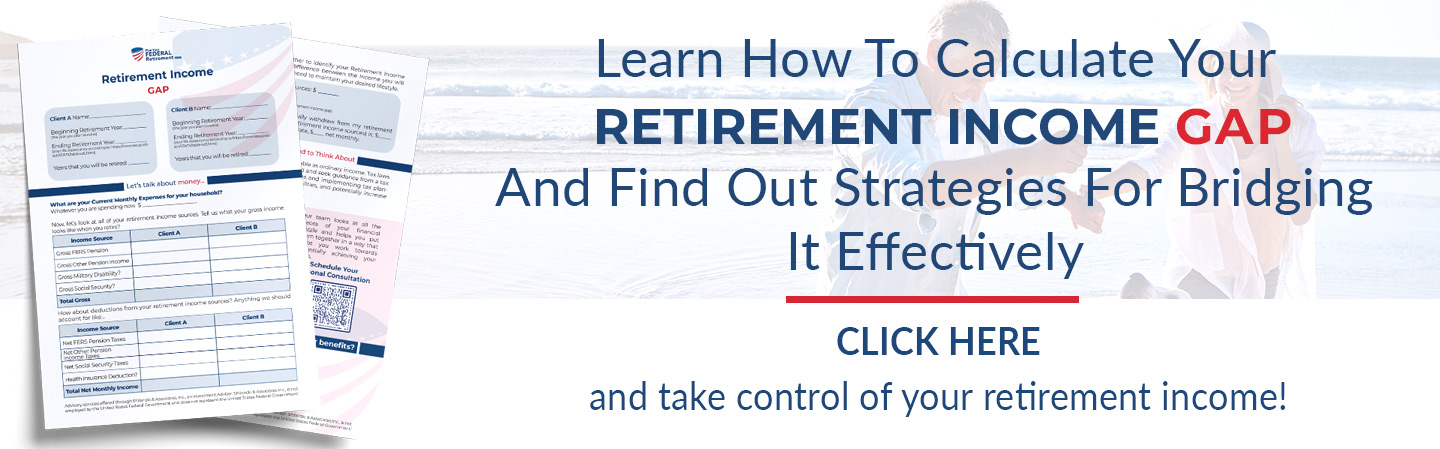
So there’s that gap, as we talk about a lot in the seminars that we do. How do we solve for the gap? And that’s where that distribution plan is so, so, important.
Yeah, distribution, when we turn on social security, all of those things kind of come into play right there, right? The other thing is we’re talking about longevity and choosing where we want to retire at. Think of services as well, right? We have some clients that want to be in more remote places. They want to be able to live there, which that’s fantastic. But more remote places means there’s less services available. So as we age and we need more help, we might have to be making a bigger move. I have other clients that want to intentionally move to an area.
that’s close to an airport, close to good medical services, but also has other services that as they age in place, there’s plenty of facilities that can accommodate them in their homes. If you don’t have that, like we have that a lot in Alaska where people live in places that their community cannot support that, and we’re planning on moving, right? Now we need to move before they have to move, and that’s always the tricky one. What are things that we need to see? The biggest one pops I’m looking at for clients is mobility and cognitive ability.
Right? Those are the two biggest things before we’re doing a move. If we start having things that have mobility issues, we probably need to start looking at making a move to more agent place facility. Let’s get ahead of this while you’re still mobile. Don’t wait till the time where you’re not mobile or you have a lot of cognitive issues. Cause now how are you going to make that move? This just became so much more challenging.
Floyd Shilanski (09:53.71)
You know, and it’s that challenging portion of that, right? So many of my clients are military, retired military as well as feds. So a lot of times, as you know, that we get these conversation about how the VA takes care of them, whether it’s, you know, try care, try care for life. But there’s certain areas of the country, the VA is not near as supportive. Because I had that conversation with a client recently, it’s got up in the state of Alaska, they got great VA benefits.
But where he wanted to relocate, we have clients that all I hear is how negative, negative, negative, negative the VA support is. So I had to have that conversation. And his face was like, what do mean I don’t get the same care? When you go down and you spend your two or three months there, go visit the VA center. You tell me and come back. And he’d come back and they changed it. That town got a red X on it and they started looking someplace else, primarily because of that.
These are the things so many times we don’t think about when we get ready to retire. We think it’ll be the same, all right? Or I’m gonna move outside the state of Alaska so my cost of living will go down. Will it? All these little things come to play with that. And as you know, I’ve always reckoned in my clients that when you get ready to move before you retire, go spend time, rent before you buy, stay in the town. San Antonio, you have North Sector, South Sector, East and West, probably all towns do. But which area do you wanna be at? Well, my church.
Great. Go to the congregation. Go to church. Do you fit in with the clique? Because so many time retirees, they get this bond and it’s hard to let someone come into the bond. So all of what you think you’ll have doesn’t exist. Let’s find out before we pop down a ton of money to buy that last and final retirement home that we wanted so much for.
This renting aspect of it, it’s really hard for people to, especially if they own their own home for a long time, it’s kind hard to swallow. We have this perception in America that renting is throwing away money. I don’t agree to that. Renting is a tool, just like any other tool. When used appropriately, it can be a good thing. When used inappropriately, it could be not such a good thing. But we’ve seen so many clients move to an area, Pops, just what you’re saying, and then want to relocate from that area. And now we’re spending tens of thousands of dollars in order to potentially hundred a thousand dollars.
Micah Shilanski (12:07.534)
to move locations in a short period of time where if they’d have showed up and rented. Now, is renting convenient all the time? No. What are you going to do with your stuff and you got a dog and all these other things to do? I’m not saying it’s the most convenient option, but sometimes it’s a good option that we at least need to consider as we’re moving into there.
You know, VRBOs today, you know, and those type things take a lot of that risk away, or some of that risk away. I can’t say a lot, but as you’re talking about that last final home, I remember in the client’s deceased now, so I’ll talk about it just a minute. He left Alaska, moved down to Oregon, all right, and a little city by, a big city by the river, and this was his dream. So he had this lot and he built this great house, and you know, for the first year it was great, the second year it was great. I remember the phone call when he called and I could hear water running. I go,
Bob, what’s going on? You know that river I by? It’s two inches away from flooding my house. I’m moving. It’s like, what? I mean, but these are the type things that these stories, and I know Micah, you tell a lot of stories. And if you listen to the podcast that I do on social security, I tell a lot of stories. Why? It’s the stories that hopefully people will resonate with. What you and I are talking about today, they’re going to put it in their own perspective, agree or disagree, but it’ll be their own perspective. But it’s the stories.
And the beauty of what you and I have done or what I’ve done for the last 40 plus years is I got a lot of stories. I’ve got a lot of people that have tried and moved and we know kind of what to expect. And I’m sure you’re seeing that today with your clients that are retiring.
So, Pops, as we kind of rewind this clock just a little bit and saying going from the, what do need to look at when you’re just about to kind of do an age in place thing to moving before you’re kind of have to move getting that. We get down to the, you know, just early retiree or the pre-retiree mode. We hinted at this, but this really comes into question a lot of being intentional in your distribution planning, right? Now, again, I mentioned there’s a YouTube video I did kind of breaking down some different options that you guys have, but this is about really good goal setting whenever we’re talking distribution planning.
Micah Shilanski (14:10.872)
How much can you, dare I say safely, try to withdraw from your money? It’s not putting too much risk that’s out there, but you’re taking enough out to live today and not having too much going to go to the kids tomorrow. And that really comes down to, number one, good cashflow planning. Knowing how much money you need in order to do the things that you want to do. What does it cost to pay the bills? What does it cost to do the things today? How much do I want to spend in trips and travel? What do I want to do for the kids and grandkids? And kind of mapping those things out.
but also earmarking for those big what ifs. So pops in your experience and your stories that you have from doing this over 40 years, like what are some of those big things that could happen that could cause us unintentionally to draw large amounts of money out of our retirement accounts?
You know, like a family is so important to both of us. And then one of the things I see a lot of my clients do, a kid, one of their children go through a divorce. They step up, fund it. Kids, grandkids have medical issues. They want to step up and they want to fund it. They want to help the grandkids university, help the grandkids buy the first house. So I don’t see a lot coming down to the first generation. I do see a lot of people want to go to the second generation.
One of my 911 calls this morning was a good client, doesn’t have a ton of money, but her good friend has to have all of her teeth removed. She’s broke, doesn’t have any money. So she wants for it. I want to advance this. paying it forward. All right. We hadn’t anticipated this draw down, but it’s so important to her. So now we’re going to kind of balance things out to come back and say, if that’s what she wants to do by all means, how do we facilitate doing that? Conversely,
One of our clients, she’s a widow, lost her husband three years ago, is in Florida, found a trailer she wants, just to get out of the cold. So now we have to, how are we going to facilitate doing that? But it is unexpected big expenses. One of the things I always ask my clients, after we go through the cashflow and the chit chat, anything you’re anticipating spending money on in the future. Maybe it’s a car, maybe it’s a holiday, maybe it’s a trip. 50th wedding anniversary that the kids don’t pay for.
Floyd Shilanski (16:15.006)
and they have to write the big check to do that.
What do mean the kids don’t pay for it? Ah, ah, ah, you did not pay for that. Like, we cut the checks on that one, so I just wanna, you know, maybe get a little credit for that one for being great kids.
Anyway, yeah, I don’t disagree with that, but that’s a joke, a running joke. But what we look at is trying to anticipate. And you know, and I know, that when clients don’t tell you there’s something out there that they’re thinking that we need to try to find out. Trying to anticipating that thing, all right? So I think that’s crucial. Whoever you’re working with, a good advisor, should always be looking out over the horizon what might be coming down the path.
One of the things that I’ve always done with my clients, I ask what their savings accounts are versus the investments. And investments we see, of course, and when I see the savings account start to go down, there’s a reason, all right? And the reason is they’re probably overspending or their distribution rate isn’t quite enough. So that allows me to know that I’ve got to kind of be ready for an additional drawdown. So instead of $10,000 a month, looks like they’re going to need 12 or 13. So it’s not a surprise when they come and say,
In off-white, I need a little bit more per month.
Micah Shilanski (17:24.366)
Yeah. And so having that flexibility, the I like to compare this, Pops, it’s the thought I’ve been kind of noodling around for a little while is people going to retire. You know, let’s say they’re retired at 57, 62, whatever that number is. You’re going to live another 30, 40 years in retirement. Imagine rewinding that clock at your retirement age by 30 years. You go from 60 to 30 years old. At 30 years old, could you have imagined how your life has changed for the last 30 years? No.
where you’ve spent money, how life has changed. Like if you go back to your 30 year old self 30 years ago, you’re like, wow, this was the plan. And then life happens and it’s going to be slightly different. Expenses are different. Kids are different. These needs that you have are different. once you have are different. That’s how we need to approach retirement as well is for the next 30 years, it’s not going to be exactly what you thought it was going to be because you’re going to change over that 30 years. Right. And so during that retirement, you need that flexibility to make sure that you’re taken care of.
So whatever distribution plan that you decide to take, whatever approach you decide to do, make sure you’re not permanently locked into things, right? That’s where I start getting a little concerned. People start locking up all of their money. They’re very restricted in how their distributions are. There may be are some pros to that, but there’s definitely some cons that are there. And it kind of raises up some of my red flags.
Having liquidity is important, Micah know, the cash flow is important, but as you said earlier, there’ll be that surprise expense, that thing that happens, right? So if you have all your money tied up, however that is, and you can’t get access to the corpus or the principal, that could create a problem with penalties.
Let’s define real quick liquidity versus marketability. So many people are like, hey, Micah, my money is liquid. It’s available. I can call Vanguard. can call Schwab and I can get my money in three days. Okay. That doesn’t mean liquid. When Floyd and I are talking about liquid, we mean access to money without risk of loss. Money market accounts, checking and savings accounts. This is liquid money. can go to my bank, virtually no risk of loss, and I can withdraw money from my money market. There’s no fees. There’s no penalties. I get access to my money. That’s going to be liquidity.
Micah Shilanski (19:26.465)
marketability, that’s your C fund, right? I can sell this E fund, I can sell the S &P 500, and then can get money out in a couple of days potentially, but there’s no guarantee of my principle that’s access there. The market’s gonna move up and down every single day. So little bit of difference in these words, but they have massive difference in the meanings. So make sure that when we’re doing planning, liquidity, any money we’re gonna need in the next three to five years is protected from the stock market.
We can’t just say great, all the TSPs in the C fund, therefore it’s liquid. It’s not. You might be able to access it, but you could access it with risk of loss. And we’ve to make sure we’re protecting against that.
You know, words, right, Micah? When someone says, Floyd, where should I park my liquid money? All right, I said, well, you high yielding accounts today, you should be getting three and a half, 3%, you fourth grade if you can find it. And I had a client just recently say, Floyd, I got this money market and I know I’m getting, 4 % and I go, really? The rates just come down. So I said, you know, I’m not doing it in this future, but let’s take a look at it. So he brings up one of his computer and I won’t name where it was at. And he says, here’s all my money, see? And I’m getting this great interest rate. So I drilled down into it, Micah.
0.02 % because it was a money market, right? Now that particular company had a high-yield savings account at four.
It’s so frustrating.
Floyd Shilanski (20:49.112)
So he set a year in this large sum of money and he thought he was getting the best rate of returns. those words, mean, knowing is so, so important. He was embarrassed. I said, don’t worry about it. We’ll fix it.
This podcast is all about action items. So for our listeners out there, our goal is to help another 1 million federal employees with their retirement. So we want to help transform the federal employees’ knowledge of financial planning. So hopefully this podcast is going to help with this. Also, take a look at a distribution plan. Like, what’s your plan and what flexibility do you have with that? I don’t care if you’re several years from retirement, you should be thinking about this. If you’re in your retirement, you need to be thinking about these things and how it affects you.
You know, Micah, whether you’re a Fed, right? You know, my market’s been a lot of the military. I used to love to get the guys in their seventh, eighth year when they were going to re-enlist and design that and plot that plan then for them. The same way with our Feds, you know? I wish more and more new employees would attend the classes, start listening to the podcasts, come to these things. Because the sooner and the younger that we can get people started in thinking about compounding interest, thinking about putting money away for the future, imagine what their future’s going to look like.
a little bit better than it might be today. Awesome.
Pops, thanks for joining us so much. Until next time, happy planning. The content in Planner Federal Retirement is for general informational purposes only and should not be considered individualized advice. Investing involves risk, including possible loss of principal, and past performance does not guarantee future results. Guests are not affiliated with Carson Wealth Management, LLC. Investment advisory services offered through Carson Wealth Management, LLC and SEC Registered Investment Advisor.